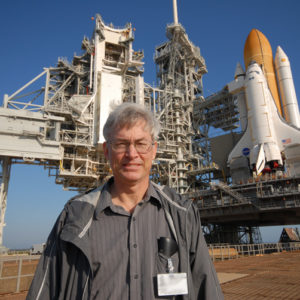


KENNEDY SPACE CENTER, FL – On Friday, Oct. 23 at NASAs Artemis Acceleration briefing NASA top Management including NASA Administrator Jared Isaacman and other leaders provided the most detailed outline ever of NASA Artemis human return to the Moon plans – held at the NASA Kennedy Space Center press site.
The lengthy and detail two-hour long briefing included details about NASA’s Artemis III mission that will send four astronauts to low Earth orbit next year to test critical systems needed for future lunar landings, and information about acceleration efforts to ensure the success of Artemis IV, the first Artemis mission on the lunar surface.
Watch a NASA recording of the update below:
https://www.youtube.com/watch?v=pAKqJxuxDgk
Caption: Tune in as agency leaders provide an update on Oct. 23, 2026 on NASA’s plans to return American astronauts to the surface of the Moon by 2028. Participants include:
- NASA Administrator Jared Isaacman
- NASA Associate Administrator Amit Kshatriya
- Jeremy Parsons, NASA’s Artemis program manager
View the NASA graphics shared during the update here and here.
For Artemis III, NASA announced concept of operations plans for a 2 week long test flight with 2 prototype human lunar landers (HLS) in low earth orbit later in 2027 and docking with NASA SLS & Orion crew of 4 astronauts.
Coordinating 3 launches of NASA SLS/Orion, SpaceX Starship and Blue Origin New Glenn heavy lift rockets within about 1 week – in the “most complicated launch campaign ever’!” said Jeremy Parsons, NASA Artemis Program Manager
For Artemis IV: NASA announced concept of operations plans from both HLS providers Blue Origin & SpaceX – target roughly mid-2028.
Selecting which company lander is more capable to go first remains TBD – based on all the mountains of work to be accomplished ahead, and which company can achieve required Performance & test objectives, best, fastest and safest
Enjoy our photos of the Artemis Acceleration update briefing taken by Ken Kremer and Jean Wright for Space UpClose
Ken Kremer asked a question asking details about both providers Artemis III Prototype lunar landers construction, testing and timelines – near the end – it was the 2nd to last question of a 2 hour long briefing; at the 1 h 58 min mark
More from NASA about Artemis III here:
During 2027 Artemis III will launch and send NASA astronauts Randy Bresnik, Frank Rubio, Andre Douglas, and ESA (European Space Agency) astronaut Luca Parmitano aboard the Orion spacecraft into low Earth orbit to perform a series of demonstrations with test versions, or test articles, of human landing systems being developed by industry partners Blue Origin and SpaceX.
During the planned 14-day mission, crews and flight controllers will practice the rendezvous, docking, habitation, and operational procedures that will be essential when Artemis astronauts begin landing near the Moon’s South Pole in 2028. The mission is designed to reduce risk, validate hardware, and gain operational experience before NASA attempts a crewed lunar landing.
“Every piece of this mission in Earth orbit is designed to reduce risk before we put astronauts back on the Moon,” said Jeremy Parsons, NASA’s Artemis program manager. “We’re launching three spacecraft on three different rockets and testing how they operate together — something NASA has never attempted. Every lesson we learn here gets us closer to landing on the Moon in 2028.”
Launch Sequence: Blue Moon first
Artemis III sequence is designed as a tightly choreographed campaign . It begins with Blue Origin launching a test version of its Blue Moon Mark 2 lander into a circular low Earth orbit approximately 273 miles (237 nautical miles) above Earth from Space Launch Complex 36A. The spacecraft can remain on orbit for up to 30 days providing schedule flexibility.
Blue Origin
SLS and Orion second:
Thereafter NASA will launch Orion atop SLS from the agency’s Kennedy Space Center Launch Complex 39B just a few days after the Blue Moon test article launch and confirmation the vehicle is healthy and ready for joint operations.
Following launch, Orion will initially enter an elliptical Earth orbit of 18 x 1122 miles (16 x 975 nautical miles). It will use its service module to perform a series of maneuvers to transition to a circular orbit at about 345 miles (300 nautical miles) for thermal stabilization before then gradually setting up its rendezvous with the waiting Blue Moon lander test article. Because each spacecraft operates in slightly different orbital regimes optimized for its mission requirements, Artemis III requires a carefully choreographed sequence of orbital maneuvers and rendezvous operations throughout the flight.
During the first two days of flight, the crew will check out Orion’s systems, prepare for proximity operations, and gradually position themselves for the mission’s first major objective: rendezvous and docking with the Blue Moon test vehicle.
The operation represents NASA’s first opportunity to evaluate how Orion and a commercial lunar lander work together in space. Engineers will assess how software aboard both spacecraft, guidance systems, communications systems, and operational procedures perform in real-world conditions, while flight controllers gain experience coordinating activities across multiple teams and organizations.
x
x
x